
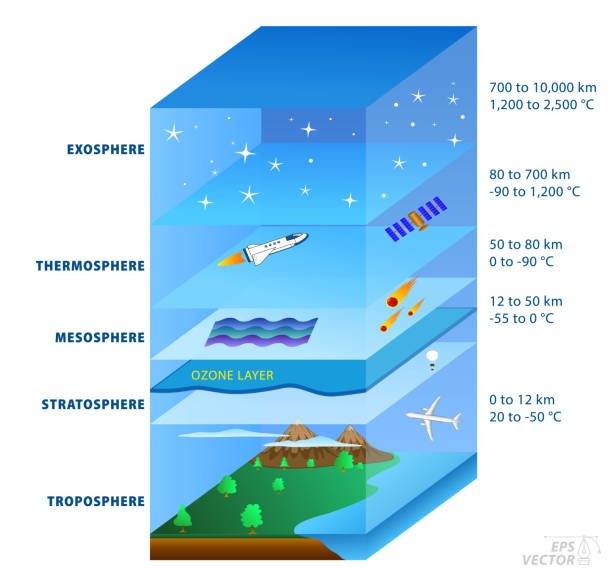
Have you ever looked up at the sky and wondered what lies above the clouds? The air around our planet may seem invisible, but it is actually made up of several important layers that protect life on Earth. Understanding the layers of atmosphere helps children learn how our planet stays safe, warm, and full of life.
This guide explains the layers of the atmosphere in a simple and engaging way, making it easy for kids to understand how each layer works and why it matters.
What Is the Atmosphere?
The atmosphere is a blanket of gases that surrounds the Earth. It is held in place by gravity and travels with our planet as it moves through space. The atmosphere provides oxygen to breathe, protects us from harmful rays from the Sun, and helps control Earth’s temperature.
Scientists divide the atmosphere into layers because each one has different characteristics. Let’s explore these layers step by step.
Why Are There Layers in the Atmosphere?
The atmosphere is divided into layers based on changes in temperature, air pressure, and altitude (height above Earth). As we move higher into the sky, the air becomes thinner, and conditions change. These differences help scientists understand weather, climate, and space more clearly.
Learning about the layers of atmosphere also builds curiosity about science and the natural world, which is encouraged in many schools, including the best CBSE schools in Sarjapur Road, where environmental science forms an important part of early education.
The Five Main Layers of the Atmosphere
1. Troposphere – Where We Live
The troposphere is the lowest layer of the atmosphere and the one closest to Earth. This is where humans, animals, and plants live.
Key features of the troposphere:
- Contains most of the air we breathe
- All weather happens here (rain, clouds, wind)
- Temperature decreases as we go higher
Airplanes usually fly in the upper part of this layer to avoid bad weather.
2. Stratosphere – Home of the Ozone Layer
Above the troposphere lies the stratosphere. This layer is very important because it contains the ozone layer.
Why the stratosphere matters:
- The ozone layer absorbs harmful ultraviolet (UV) rays from the Sun
- Protects living beings from skin damage and eye problems
- Temperature increases with height due to ozone absorption
Many students first learn about ozone protection and climate awareness in schools that follow global curricula, such as the best IGCSE schools in Bangalore, where environmental topics are taught with a global perspective.
3. Mesosphere – The Coldest Layer
The mesosphere is the third layer of the atmosphere and is located above the stratosphere.
Interesting facts about the mesosphere:
- It is the coldest layer of the atmosphere
- Meteors burn up here before reaching Earth
- Temperatures can drop extremely low
This layer protects Earth by stopping space rocks from hitting the ground.
4. Thermosphere – Where Space Begins
The thermosphere is a very high layer where temperatures rise sharply.
What happens in the thermosphere:
- Auroras (Northern and Southern Lights) occur here
- Satellites and the International Space Station orbit in this layer
- Air is extremely thin
Even though it is very hot, humans would feel cold because there is very little air to carry heat.
5. Exosphere – The Edge of the Atmosphere
The exosphere is the outermost layer and blends into outer space.
Features of the exosphere:
- Contains very little air
- Artificial satellites move through this region
- Marks the boundary between Earth and space
This layer is where Earth’s atmosphere slowly fades into the universe.
Why Learning About the Layers of Atmosphere Is Important
Understanding the layers of atmosphere helps children learn:
- How Earth supports life
- Why weather changes
- How the planet is protected from space dangers
- The importance of caring for the environment
Environmental education builds scientific thinking and responsibility from a young age. Schools that integrate hands-on learning and nature-based activities—such as the best IGCSE schools in Sarjapur Road—help students connect classroom learning with the real world.
Fun Ways Kids Can Remember the Layers
Here’s a simple trick to remember the layers from bottom to top:
Troposphere
Stratosphere
Mesosphere
Thermosphere
Exosphere
A fun sentence to remember this order is:
“The Smart Monkey Took Exams.”
How the Atmosphere Protects Earth
The atmosphere acts like Earth’s shield by:
- Blocking harmful solar radiation
- Burning up meteors
- Regulating temperature
- Supporting weather and climate
Without the atmosphere, Earth would be too hot during the day and too cold at night, making life impossible.
Conclusion
The layers of atmosphere work together to protect our planet and support life. From the troposphere where we live to the exosphere that touches space, each layer has a special role to play. Learning about these layers helps children understand the world around them and develop a love for science and nature.
By exploring topics like the atmosphere early on, students gain curiosity, awareness, and respect for the planet they call home.
FAQs
- How many layers are there in the atmosphere?
There are five main layers of the atmosphere. - Which layer do we live in?
We live in the troposphere. - Where do airplanes fly?
Most airplanes fly in the upper troposphere or lower stratosphere. - Which layer protects us from harmful sunlight?
The ozone layer in the stratosphere protects us from harmful UV rays. - Is space part of the atmosphere?
No. Space begins beyond the exosphere, where Earth’s atmosphere ends.