
Have you ever wondered whether India has volcanoes? Many students are surprised to learn that there is an active volcano in India. Volcanoes are powerful natural features that shape the Earth’s surface and teach us important lessons about geology, plate tectonics, and natural forces.
In this article, young explorers will discover which is the active volcano in India, where it is located, how it works, and some fascinating facts that make it unique. This guide is designed to make earth science both engaging and accurate for school students and parents.
What Is a Volcano?
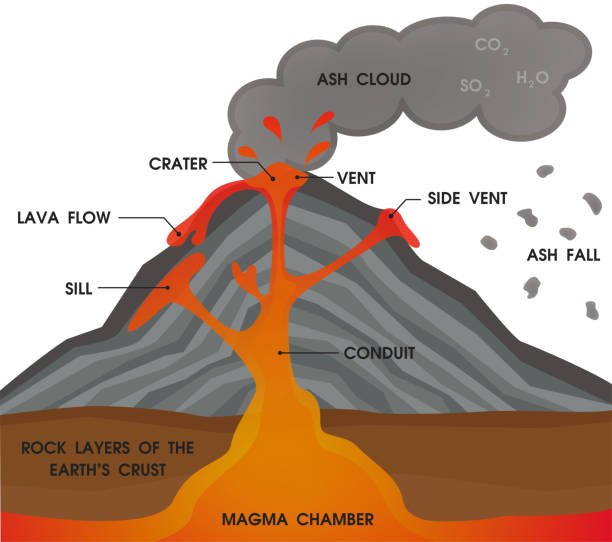
A volcano is an opening in the Earth’s crust through which molten rock (called magma), ash, and gases escape. When magma reaches the Earth’s surface, it is known as lava. Volcanoes are formed due to movements beneath the Earth’s crust, often linked to tectonic plates.
There are three main types of volcanoes:
- Active volcanoes – Currently erupting or likely to erupt again
- Dormant volcanoes – Not erupting now but may erupt in the future
- Extinct volcanoes – Unlikely to erupt again
Understanding these categories helps students identify why the active volcano in India is so significant.
Which Is the Active Volcano in India?
Barren Island – India’s Only Active Volcano
The only active volcano in India is located on Barren Island in the Andaman and Nicobar Islands. This island lies in the Andaman Sea, about 135 kilometres northeast of Port Blair.
Barren Island is part of a chain of islands formed due to tectonic activity. The volcano has erupted multiple times in recent history, with recorded eruptions in 1991, 2005, and even in the 21st century.
The island is uninhabited, meaning no people live there permanently. This reduces risk, although the area is monitored carefully by scientists.
Where Is Barren Island Located?
Barren Island is situated in the eastern part of India, in the Andaman Sea. It belongs to the Andaman and Nicobar Islands, which are located between India and Southeast Asia.
This region lies near a tectonic boundary where the Indian Plate meets the Burma Microplate. Such boundaries are common locations for volcanic activity around the world.
Why Is Barren Island an Active Volcano?
The active volcano in India exists because of tectonic plate movement. When one plate moves beneath another, heat and pressure build up. This process, known as subduction, melts rock and forms magma. When pressure increases, the magma escapes through weak points in the Earth’s crust, causing eruptions.
Barren Island is part of the volcanic arc formed due to this subduction process. This makes it scientifically important for studying Earth’s internal processes.
Fun Facts About the Active Volcano in India
Here are some interesting facts young explorers will enjoy:
- Barren Island is India’s only confirmed active volcano.
- It rises about 354 meters above sea level.
- The island is restricted to tourists for safety reasons.
- Scientists regularly monitor its activity using satellites and research surveys.
- It is part of the Pacific “Ring of Fire,” a region known for earthquakes and volcanoes.
Learning about natural phenomena like volcanoes helps children understand how dynamic our planet is.
Does India Have Any Other Volcanoes?
Yes, India also has a dormant volcano known as Narcondam Island, located near Barren Island. However, it has not shown recent signs of eruption and is considered inactive compared to Barren Island.
Students studying geography in progressive institutions, including some of the best schools in Bangalore, often explore such real-world examples to understand landforms better.
Why Is Learning About Volcanoes Important for Students?
Studying volcanoes helps children:
- Understand natural disasters and safety measures
- Learn about Earth’s structure and tectonic plates
- Develop curiosity about geology and environmental science
- Connect textbook knowledge with real-world geography
Many CBSE schools in Bangalore incorporate earth science topics into their curriculum to build awareness about natural processes and environmental responsibility.
How Do Scientists Monitor the Active Volcano in India?
Modern technology plays an important role in monitoring Barren Island. Scientists use:
- Satellite imaging
- Seismic sensors
- Thermal cameras
- Gas emission studies
These tools help researchers detect early warning signs of eruptions. Students in institutions such as top CBSE schools in Bangalore are often introduced to such scientific methods to encourage interest in STEM fields.
Volcano Safety and Awareness
Even though Barren Island is uninhabited, understanding volcano safety is important. Around the world, people living near active volcanoes follow safety guidelines such as evacuation planning and emergency drills.
Schools that focus on environmental education, including several best CBSE schools in Bangalore, emphasize disaster awareness and preparedness as part of holistic learning.
Conclusion
The active volcano in India is located on Barren Island in the Andaman and Nicobar Islands. Though remote and uninhabited, it plays an important role in helping scientists understand Earth’s geological processes. Learning about volcanoes allows young explorers to appreciate the power and complexity of our planet.
By studying real examples like Barren Island, students develop curiosity, scientific thinking, and a deeper understanding of geography. Exploring such natural wonders reminds us that Earth is constantly changing—and there is always something new to discover.
FAQs
- Which is the only active volcano in India?
Barren Island in the Andaman and Nicobar Islands is the only active volcano in India. - Is Barren Island safe to visit?
The island is generally restricted due to volcanic activity and safety concerns. - When did Barren Island last erupt?
It has erupted multiple times in recent decades, including activity in the 21st century. - Are there other volcanoes in India?
Narcondam Island is considered a dormant volcano, but it is not currently active. - Why should students learn about volcanoes?
Studying volcanoes helps students understand Earth’s structure, natural disasters, and environmental science concepts.