
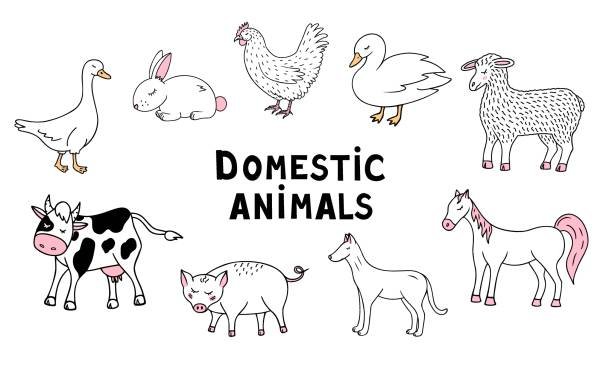
Learning about animals is one of the earliest and most important steps in a child’s education. Among various animal categories, domestic animals are usually introduced first because children see them frequently in daily life. Understanding the 20 domestic animals name list helps students recognise animals, learn their uses, and develop empathy toward living beings.
Domestic animals are animals that humans have tamed and raised for companionship, farming, transportation, protection, or other daily needs. This article provides a comprehensive and child-friendly explanation of 20 common domestic animals, making it suitable for school learning, projects, and general knowledge development.
What Are Domestic Animals?
Domestic animals are animals that live with humans or are raised on farms. Unlike wild animals, they depend on humans for food, shelter, and care. In return, they support humans by providing milk, meat, wool, protection, labor, or companionship.
Introducing domestic animals at an early age encourages responsibility, kindness, and environmental awareness among children. Schools that emphasise holistic learning, such as schools in Sarjapur Road, often integrate animal studies into environmental science and early learning curricula.
20 Domestic Animals Name with Detailed Information
1. Cow
The cow is one of the most important domestic animals. It provides milk, which is used to make dairy products such as butter, cheese, and curd. Cows are herbivores and are commonly found on farms. They are known for their gentle nature and play a vital role in agriculture.
2. Buffalo
Buffaloes are strong domestic animals mainly raised for milk and farm work. Buffalo milk is richer and thicker than cow milk. They are commonly found in rural areas and are well adapted to hot and humid climates.
3. Goat
Goats are small domestic animals that are easy to raise. They provide milk, meat, and sometimes wool. Goats can eat a wide variety of plants and are known for their playful and curious behavior.
4. Sheep
Sheep are domestic animals mainly reared for wool, meat, and milk. Wool obtained from sheep is used to make clothes and blankets. Sheep are usually kept in flocks and prefer grassy areas.
5. Dog
Dogs are loyal domestic animals often kept as pets. They are known for guarding homes, assisting police and rescue teams, and providing companionship. Dogs are intelligent and easily trained.
6. Cat
Cats are small domestic animals commonly kept as pets. They help control rodents and are known for their cleanliness and independence. Cats are affectionate and form strong bonds with humans.
7. Horse
Horses are strong domestic animals used for transportation, farming, and sports. Historically, horses played a crucial role in travel and warfare. Today, they are also used in racing and therapy programs.
8. Donkey
Donkeys are hardworking domestic animals used for carrying loads in rural and hilly regions. They are known for their strength, endurance, and calm nature.
9. Camel
Camels are domestic animals found mainly in desert regions. They are known as the “ship of the desert” because they can travel long distances without water. Camels are used for transportation and milk production.
10. Pig
Pigs are domestic animals raised mainly for meat. They are intelligent and adaptable animals. Pigs are omnivores and can eat both plant and animal-based food.
More Common Domestic Animals
11. Hen
Hens are domestic birds raised for eggs and meat. They are commonly found in poultry farms. Eggs laid by hens are an important source of protein.
12. Duck
Ducks are domestic birds that live near water bodies. They provide eggs and meat. Ducks are known for their waterproof feathers and webbed feet.
13. Turkey
Turkeys are large domestic birds raised for meat. They are commonly farmed and are known for their distinctive gobbling sound.
14. Rabbit
Rabbits are small domestic animals often kept as pets. They are gentle, herbivorous, and known for their soft fur and long ears.
15. Ox
Oxen are male cattle trained for farm work. They are used to plough fields and pull carts. Oxen are strong and play a vital role in traditional farming.
Additional Domestic Animals
16. Mule
A mule is a domestic animal that is a cross between a horse and a donkey. Mules are strong, hardworking, and commonly used to carry loads in mountainous areas.
17. Yak
Yaks are domestic animals found in cold mountainous regions. They provide milk, meat, and wool and are used as pack animals.
18. Llama
Llamas are domestic animals used mainly for carrying loads and producing wool. They are gentle and often raised in herds.
19. Guinea Pig
Guinea pigs are small domestic animals kept as pets. They are friendly, easy to care for, and often used in classrooms to teach children responsibility.
20. Pigeon
Pigeons are domestic birds that are sometimes kept for communication and as pets. They are intelligent birds with strong homing abilities.
Importance of Teaching Domestic Animals in Schools
Learning the 20 domestic animals name list helps children:
- Improve vocabulary and observation skills
- Understand human-animal relationships
- Develop empathy and responsibility
- Build environmental awareness
Educational institutions such as top CBSE schools in Bangalore often include animal studies in early science education to strengthen real-world understanding and moral values.
Domestic Animals and Environmental Awareness
Teaching children about domestic animals also helps them understand sustainability and animal welfare. Proper care, ethical treatment, and respect for animals are essential lessons for future generations.
Schools following international curricula, including top IGCSE schools in Bangalore, often integrate animal life studies with environmental education to encourage global citizenship and compassion.
Conclusion
Understanding the 20 domestic animals name list is an essential part of early learning. Domestic animals support human life in many ways—through food, farming, companionship, and transportation. Teaching children about these animals helps build knowledge, responsibility, and respect for nature.
By learning about domestic animals in a structured and meaningful way, students develop a strong foundation in environmental science and moral education that supports lifelong learning.
FAQs
- What are domestic animals?
Domestic animals are animals that live with humans and are raised for food, work, or companionship. - Why should children learn domestic animals names?
It helps improve vocabulary, awareness, and understanding of nature and daily life. - Are birds also domestic animals?
Yes, birds like hens, ducks, and pigeons are considered domestic animals. - What is the difference between domestic and wild animals?
Domestic animals live with humans, while wild animals live in forests and natural habitats. - At what age should children learn about domestic animals?
Children can start learning domestic animals from early primary classes.