
Why School Libraries Can Be More Than Just Places for Books
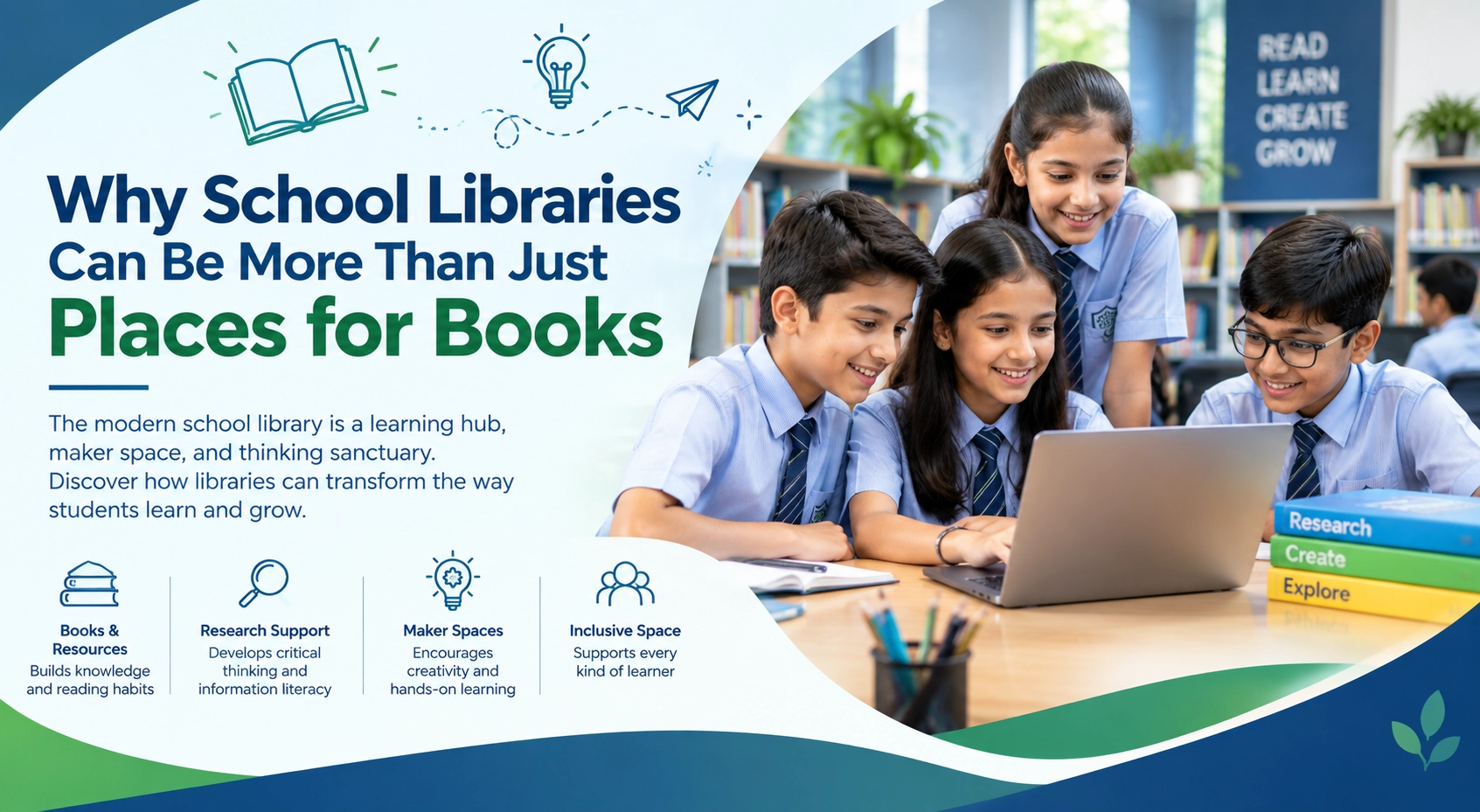
The image most people carry of a school library — hushed rows of shelves, a stern librarian, and the smell of old pages — has been quietly replaced in forward-thinking schools by something far more dynamic. Today’s best school libraries are collaboration spaces, research hubs, maker zones, and quiet retreats, all rolled into one.
Yet many schools still underuse their libraries, treating them as overflow storage for textbooks or a destination for free periods. This is a significant missed opportunity. When a school library is thoughtfully designed and actively integrated into the curriculum, it becomes one of the most powerful learning environments in the building.
From Repository to Resource Hub
The traditional library was built around a single function: holding books. Students came in, found a book, and left. The transaction was simple, and the value was proportional — the more books the library held, the more useful it was.
The modern school library operates on a completely different model. It’s not primarily about the books (though those still matter). It’s about access — to information, to tools, to space, and to a trained professional who can help students navigate all of it.
Among the top cbse schools in bangalore, the libraries that make the biggest difference are those where the librarian functions as an educator in their own right — not as a caretaker of books, but as a guide for research, critical thinking, and information literacy.
Information Literacy: The Skill Schools Are Racing to Develop
In an era when students can find almost any fact in seconds, the ability to locate information is no longer the valuable skill — the ability to evaluate it is. Can a student tell the difference between a credible source and a misleading one? Do they know how to cross-reference, fact-check, and synthesise information from multiple perspectives?
This is information literacy, and the school library is the natural home for teaching it. Librarians who are trained in this area work with students to understand not just how to search, but how to think about what they find — skills that matter enormously in secondary school, in university, and throughout their working lives.
| Library Function | What It Teaches Students | Who Benefits Most |
|---|---|---|
| Curated book collection | Reading habits, subject depth | All age groups |
| Research support | Information literacy, source evaluation | Upper primary and secondary |
| Quiet reading space | Focus, independent learning | All age groups |
| Maker / project space | Creativity, collaboration, making | Middle and upper primary |
| Digital resource access | Digital literacy, research skills | Secondary students |
| Story sessions / read-alouds | Language, imagination, listening | Early years and lower primary |
The Library as a Space for Every Kind of Learner
One of the library’s most underappreciated qualities is that it accommodates learners who don’t always thrive in a conventional classroom. The student who finds whole-class teaching overwhelming might flourish in a quieter space with access to books on their specific interest. The student who’s already ahead of the class curriculum can explore independently without disrupting the pace of the lesson.
The schools in sarjapur road that invest seriously in their library infrastructure tend to find that it supports differentiated learning in a way that’s genuinely difficult to achieve in the standard classroom — because the library, by its nature, is self-directed.
Introverted learners, voracious readers, reluctant readers, and curious explorers all find their own relationship with a well-run library — and that diversity of engagement is a strength, not a complication.
Maker Spaces and the Library as a Creative Hub
A growing number of schools are incorporating maker spaces into their library footprint — areas equipped with materials for building, crafting, coding, and creating. The principle behind this is straightforward: learning by making is deeply effective, and the library’s inherently open-ended environment is well suited to it.
A student who spends a lunch break building a simple circuit or designing a poster for a school event is practising the same skills — planning, problem-solving, iteration — that formal STEM education targets. The difference is that in the maker space, the project belongs to the student.
- Basic craft and construction materials for younger students
- Coding tools and simple robotics kits for middle primary
- 3D printing access and design software for secondary students
- A quiet zone for independent reading and research at every level
- A collaborative area for group projects and peer discussion
Building a Reading Culture That Extends Beyond Class Requirements
Perhaps the most fundamental role of the school library is the one it was originally built for: getting children to read. Not because they have to, but because they want to.
A well-curated library — with collections that reflect student interests, new arrivals displayed prominently, and a librarian who knows what each student tends to enjoy — becomes a place students actually want to visit. And students who read for pleasure consistently outperform their peers not just in English, but across subjects.
Parents evaluating the best international schools in bangalore for their children should look at the library as a telling indicator of how seriously a school takes learning beyond the formal curriculum. A well-stocked, actively used library signals a school culture that values curiosity, independent thinking, and a love of learning.
The Librarian as Educator
The quality of a school library is almost always inseparable from the quality of its librarian. A trained school librarian does far more than organise and lend books — they curate collections with intention, collaborate with classroom teachers to support specific units of study, run reading programmes, and provide one-on-one research support to students who need it.
What a Great School Librarian Does
- Collaborates with teachers to align library resources with current curriculum topics
- Teaches information literacy skills directly — how to evaluate sources, structure research, and cite properly
- Runs reading initiatives and book clubs that build a culture of reading beyond the classroom
- Identifies and supports reluctant readers with personalised recommendations and low-pressure engagement
- Keeps the collection current and relevant, weeding outdated material and acquiring new titles based on student and teacher needs
How Schools Can Maximise Their Library's Potential
Not every school has the budget for a state-of-the-art facility, but the principles of an effective library apply regardless of size or resources. What matters most is intentionality — treating the library as an active part of the academic programme, not an afterthought.
- Schedule regular library periods for all year groups, not just as a reward or free period
- Involve the librarian in curriculum planning so the collection stays relevant to what's being taught
- Display new books and student-recommended titles prominently to drive voluntary engagement
- Create a comfortable, welcoming environment — seating, lighting, and layout all affect how much time students want to spend there
- Track and celebrate reading milestones to build motivation
Key Takeaways
- The modern school library is a research hub, maker space, quiet retreat, and reading culture centre combined
- Information literacy — knowing how to evaluate, not just find, information — is one of the most critical skills a library can develop
- Libraries support every type of learner, particularly those who don't thrive in conventional classroom settings
- The quality of the school librarian is often the single biggest factor in a library's impact on students
- A well-used library is a reliable indicator of a school that values curiosity and independent learning
Conclusion
A school library, at its best, is not a room of books — it’s a room of possibilities. It’s where students develop the habit of asking questions, the patience to seek answers, and the confidence to explore ideas that don’t appear on the syllabus. The best schools in Bangalore that treat their libraries as living, evolving learning spaces rather than static collections are the ones producing students who don’t just know things, but know how to keep learning — which is, ultimately, the most important skill a school can give a child.
If you want to understand a school’s philosophy toward learning, walk into their library. It will tell you almost everything you need to know.
FAQs
1. How often should students visit the school library?
Ideally, every student should have at least one dedicated library period per week, with open access during lunch and free periods. Frequency of exposure directly correlates with reading habits and research skills.
2. What makes a school library effective?
An effective school library has a current and relevant collection, a trained and engaged librarian, comfortable spaces for different types of learning, and active integration into the school’s curriculum — not just a room that exists independently of classroom learning.
3. How can parents encourage library use at home?
Make regular visits to the public library a family habit. Let children choose their own books freely, without directing them toward ‘educational’ content. Reading for pleasure is the foundation of all library engagement.
4. What is information literacy and why does it matter?
Information literacy is the ability to find, evaluate, and use information effectively. In an age of misinformation, it’s one of the most critical skills schools can teach — and the library is its natural home.
5. Can a school library support students with learning differences?
Absolutely. Libraries with audiobooks, graphic novels, large-print editions, and quiet reading zones are particularly valuable for students with dyslexia, sensory sensitivities, or attention challenges. The self-directed nature of library learning is also a natural fit for many neurodiverse learners.
6. What is a maker space in a school library?
A maker space is a designated area within or adjacent to the library where students can build, design, code, and create. It extends the library’s role from passive information access to active, hands-on learning.
7. How do I know if a school's library is good?
Look for a collection that is up to date and well-maintained, a librarian who is known and liked by students, evidence of active reading programmes, and a space that students actually choose to spend time in.
8. Are digital libraries replacing physical school libraries?
Digital resources and e-book collections are valuable supplements, but research consistently shows that physical books and browsable shelves produce higher voluntary reading engagement among children. The most effective libraries blend both.