
What Children Can Learn From Visiting a Museum
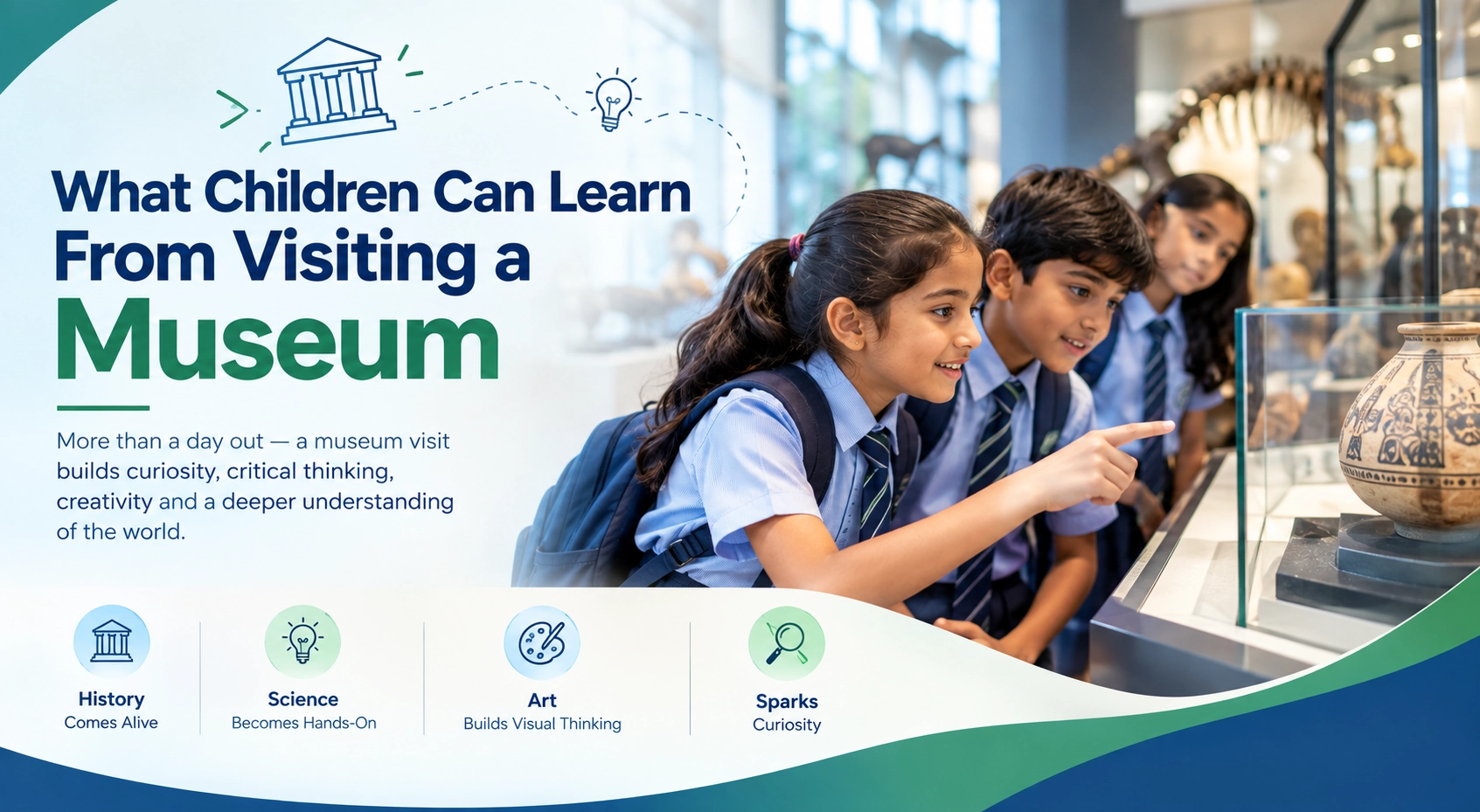
A museum visit might look like a day out — but for a child who’s guided well through the experience, it’s one of the richest learning environments available. Unlike a classroom, a museum engages all the senses, presents knowledge in context, and allows children to encounter ideas they weren’t expecting.
Whether it’s a science museum, an art gallery, a natural history collection, or a local heritage space, what children take away from a well-planned museum visit extends far beyond facts and dates. Here’s a closer look at what’s really happening during those hours of walking, looking, and asking questions.
History Comes Alive in a Way Textbooks Cannot Match
Reading about the Indus Valley civilisation is one thing. Standing in front of an actual artefact from that period — a bead, a seal, a piece of pottery — is something else entirely. The physical reality of objects from the past makes history feel immediate and personal rather than distant and abstract.
Children who visit history and heritage museums often return to their classrooms with a different relationship to what they’re studying. The timeline on the wall stops being a series of dates and becomes a story they’ve touched — sometimes literally.
Many of the cbse schools in bangalore that prioritise experiential learning include structured museum visits as part of their social studies and history programmes, precisely because the impact of seeing history in person is difficult to replicate through any other medium.
Science Becomes Something You Can Explore, Not Just Study
Science museums and natural history collections are particularly powerful for younger children because they bridge the gap between the abstract and the tangible. A model of the solar system that stretches across a room communicates scale in a way that no diagram can. An interactive exhibit on electricity or fluid dynamics lets children test and observe principles they’ve only read about.
This hands-on engagement builds what educators call ‘experiential knowledge’ — the kind that sticks because the child’s body and curiosity were both involved in the discovery.
Key Science Concepts Museums Introduce Naturally
- Scale and proportion — the size of planets, animals, geological formations
- Cause and effect — interactive exhibits that show what happens when variables change
- Classification — how living things, objects, or ideas are grouped and why
- Change over time — fossils, evolution, geological eras, and historical timelines
Art Museums Build Visual Thinking and Emotional Intelligence
Art galleries are sometimes seen as the ‘quiet’ option on the museum list — less exciting than science exhibits, less dramatic than natural history. But for children who are given the right context and a few open-ended questions, an art museum is one of the most intellectually stimulating environments available.
Looking at a painting or sculpture carefully — really looking — develops the ability to observe, interpret, and express. When a child stands in front of a work and is asked ‘what do you notice?’ or ‘how does this make you feel?’, they’re practising critical thinking, empathy, and communication simultaneously.
The best international schools in Bangalore that incorporate arts-integrated learning into their curriculum understand that visual literacy — the ability to read and respond to images, compositions, and symbols — is as important a skill in today’s world as reading and writing.
Museums Develop Curiosity as a Habit
One of the less-discussed outcomes of a good museum visit is what it does to a child’s relationship with not knowing something. In a museum, encountering something unfamiliar is the whole point. Children learn to lean into that unfamiliarity — to ask questions, seek explanations, and feel comfortable with the process of figuring things out.
This is the foundation of intellectual curiosity, and it’s a habit that transfers directly into academic performance. Children who are comfortable asking questions learn faster across every subject.
| Type of Museum | Primary Learning Outcome | Skills Developed |
|---|---|---|
| History / Heritage | Contextual understanding of the past | Critical thinking, empathy, perspective |
| Science / Technology | Conceptual and experiential science | Inquiry, observation, problem-solving |
| Art Gallery | Visual literacy, aesthetic awareness | Interpretation, expression, creativity |
| Natural History | Biology, ecology, evolution | Classification, scientific curiosity |
| Children’s Museum | Play-based exploration | Creativity, motor skills, imagination |
Cultural Awareness and Empathy Through Exposure
Museums that focus on different cultures, communities, or historical periods place children in contact with lives and perspectives very different from their own. This exposure — when it’s thoughtfully framed — builds empathy and cultural awareness in a way that abstract lessons struggle to achieve.
A child who sees the tools, clothing, and everyday objects of a community from a different country or era begins to understand that people across time and geography have solved similar problems in remarkably different ways. That insight is the beginning of genuine cultural intelligence.
For parents researching the best schools in bangalore with a strong focus on global citizenship and values education, structured museum experiences are one of the key markers of a school that takes experiential, whole-child learning seriously.
Practical Skills Museums Build Without Children Realising
Beyond the academic and emotional development, museum visits quietly build a set of practical skills:
- Sustained attention — moving through a museum at a considered pace trains focus in a world full of short-form content
- Reading in context — labels, captions, and exhibit descriptions build reading comprehension with genuine purpose
- Navigation — finding their way around a large space with a map builds spatial reasoning
- Note-taking and observation — children who are given a simple worksheet or sketchbook during visits learn to record what they see
- Asking for help — interacting with museum staff and guides builds communication confidence
How to Make a Museum Visit More Meaningful
The difference between a good museum visit and a great one often comes down to a little preparation and a few intentional conversations.
- Before you go: Look up what the museum covers and talk about one thing your child is curious about. Give the visit a focus.
- During the visit: Ask open-ended questions rather than testing factual recall. ‘What surprised you?’ works better than ‘What year was this made?’
- After the visit: Ask your child to draw, write about, or explain one thing they want to remember. This consolidates the experience.
- Follow up: If something sparked genuine curiosity, find a book, documentary, or article on the topic and follow the thread together.
Key Takeaways
- Museums turn abstract curriculum content into tangible, memorable experiences
- Science, history, and art museums each develop distinct and valuable cognitive skills
- The habit of curiosity — being comfortable with not knowing — is one of the most important outcomes of museum learning
- Cultural exposure through museum visits builds empathy and global awareness
- Simple preparation and follow-up conversations significantly increase the learning value of any museum visit
Conclusion
A museum visit is rarely just a day off from school. For children who are encouraged to engage with what they see — to question, wonder, and connect it to what they already know — it’s one of the most stimulating learning experiences available. The best cbse schools in bangalore that make museum visits a regular part of their academic calendar understand something important: the best education happens when the walls of the classroom expand to include the world outside it.
The next time you’re planning a family outing, consider the museum not as a cultural obligation but as an investment in the way your child thinks.
FAQs
1. What is the best age to start taking children to museums?
Children as young as two or three can benefit from the sensory experience of a well-designed children’s museum or natural history display. The key is matching the type of museum to the child’s current interests and attention span.
2. How long should a museum visit be for young children?
For children under six, one to two hours is usually ideal. Older children can sustain two to three hours if the exhibit genuinely interests them. It’s better to leave wanting more than to exhaust the experience.
3. Should I buy a workbook or guide for the museum visit?
Many museums offer free educator packs or child-friendly guides at the entrance — these are worth picking up. A simple sketchbook where children can draw what they find interesting also works well.
4. What if my child isn't interested in the exhibits?
Follow their lead. Children often respond to unexpected things in museums. Give them the freedom to spend more time at what interests them rather than moving through exhibits in order.
5. How do I explain complex exhibits to young children?
Keep explanations short and connected to something they already know. ‘This dinosaur was as tall as our building’ is more meaningful to a young child than any geological date.
6. Are virtual museum tours as effective as physical visits?
Virtual tours are a useful supplement, particularly for museums that aren’t locally accessible. But the physical experience — the scale, the atmosphere, the sensory engagement — is difficult to replicate digitally.
7. What types of museums are best for school-age children?
Science and natural history museums tend to generate the most immediate engagement. Art museums work best when children are given creative prompts or activities. Heritage museums are particularly powerful when connected to something the child is already studying.
8. How do I keep children engaged during a long museum visit?
Build in breaks, give them something to look for (a scavenger hunt approach works well), and let them lead the route occasionally. Ownership of the experience keeps engagement higher than a guided walkthrough.