
What Is a School Timetable? Understanding How a School Day Is Planned
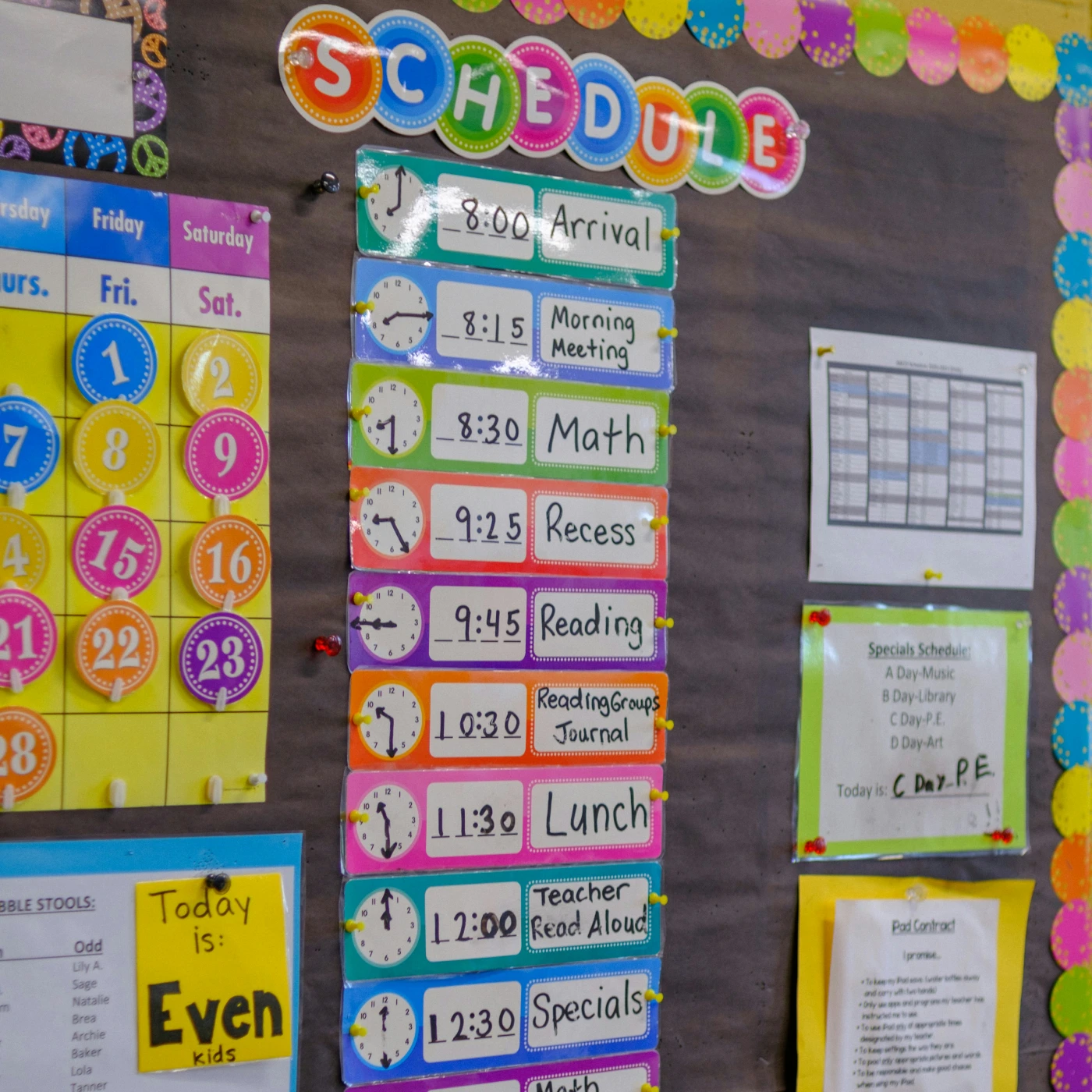
Ask a student what happens at school and they’ll usually describe subjects, not structure. But behind every school day is a carefully built timetable, a plan that decides when a child learns maths, when they get a break, and when their attention is freshest for the subjects that need it most.
A school timetable looks simple on paper, a grid of periods and subjects, but a well-built one is the result of real planning around how children learn, not just how many classes need to fit into a day.
What a School Timetable Actually Is
At its simplest, a timetable is a structured plan that allocates specific time slots to subjects, activities, and breaks across a school day and week. But a good timetable does more than fill slots. It sequences learning in a way that matches how attention, energy, and focus actually work in growing children.
Among the best schools in bangalore timetabling is treated as a genuine part of academic planning, not an administrative afterthought handled once at the start of the year and left untouched.
It also has to work around a school’s physical constraints, how many labs, playgrounds, or music rooms are available at any given time, which is why two schools with identical subjects can still end up with fairly different timetables.
Timetables usually get rebuilt from scratch each academic year rather than lightly edited, because a single change, a new elective, a teacher’s revised availability, can ripple through the entire structure and force several other slots to move.
What Goes Into Planning a Timetable
Subject Load and Curriculum Requirements
Every board, CBSE, ICSE, or an international curriculum, specifies a minimum number of hours per subject across the year. Timetabling starts here, working backward from these requirements to figure out how many periods each subject needs each week, then fitting them into the available days without overloading any single one.
Core subjects like maths, language, and science usually take priority in this process, since their hour requirements are strictest, and everything else, electives, activity periods, revision slots, gets fitted around them.
Teacher Availability and Workload
A timetable also has to account for which teachers are free when, how many classes a single teacher can reasonably handle in a day, and how to avoid clustering a teacher’s classes so tightly that quality suffers by the fourth or fifth period.
Age-Appropriate Attention Spans
Younger children lose focus faster than older students, so their timetables usually mix shorter, more varied periods with frequent breaks. Senior students can sustain longer, more demanding sessions, which is why timetables shift noticeably as children move up through the grades.
This is also why primary grades rarely see the same subject taught for two consecutive periods, while senior grades often do, particularly for lab-based or project-heavy subjects that genuinely benefit from an extended block of time.
A Typical School Day, Broken Down
Most school days follow a broadly similar shape: an assembly or settling-in period, a run of core academic subjects through the morning when concentration tends to be highest, a lunch break, then a mix of secondary subjects, activity periods, and sport or art in the afternoon when sustained academic focus is harder to maintain.
Several cbse schools in bangalore structure their day this way deliberately, placing subjects like mathematics and science earlier, when students are freshest, and activity-based or elective periods later in the day.
Why Some Subjects Are Placed Where They Are
Timetable placement isn’t random. Subjects that demand heavy concentration, mathematics, science, language comprehension, are usually scheduled earlier in the day, while subjects involving movement, discussion, or creativity fit naturally into later, lower-energy periods.
This is also why double periods exist for certain subjects. Lab work, extended writing tasks, or project-based learning genuinely need more than a standard thirty-five or forty-minute slot to be useful, so timetables build in longer blocks where the subject demands it.
The day before an exam or assessment week often sees a slightly different arrangement too, with lighter, revision-focused periods replacing the usual pace, since the goal at that point shifts from covering new material to consolidating what’s already been taught.
How Good Timetabling Affects Learning
The difference between a rushed, poorly sequenced day and a well-planned one shows up quickly in how students actually perform and engage, which is part of why some of the best cbse schools in bangalore revisit their timetable structure every year rather than repeating the same template.
Aspect | Poorly Planned Timetable | Well Planned Timetable |
|---|---|---|
Subject sequencing | Heavy subjects bunched together or placed late in the day | Demanding subjects placed when concentration is highest |
Breaks | Too few, or poorly spaced through the day | Regular, well-timed breaks matched to attention spans |
Teacher load | Teachers back-to-back with no gaps | Reasonable spacing that keeps teaching quality consistent |
Activity balance | Sport, art, and electives squeezed into leftover slots | Activities given genuine, protected time each week |
Common Timetable Questions Parents Ask
- Why does my child have the same subject twice in one day sometimes? Usually to accommodate a double period for labs or projects, not a scheduling error
- Why do younger grades have shorter days than senior grades? Younger children have shorter effective attention spans, so their academic day is deliberately compressed
- Why does the timetable change at the start of certain terms? Elective subjects, exam preparation, and project work often need different time allocations at different points in the year
- Can parents request timetable changes? Individual changes are rare, but schools do take feedback into account during annual planning
What Parents Can Look For When Evaluating a School
A school’s timetable is a genuinely useful, and often overlooked, indicator of how seriously it takes day-to-day learning. Ask how subjects are sequenced, how breaks are spaced, and how the school handles the balance between academics and activities.
Many best international schools in bangalore are transparent about this by design, sharing timetable structures with prospective parents as part of admissions conversations, since it reflects genuine pedagogical thinking rather than just administrative convenience.
It’s a small thing to ask about, but the answer tends to say a lot. A school that can explain its timetable logic clearly is usually a school that has actually thought it through.
Key Takeaways
- A school timetable is a structured plan, not just a grid, built around how children actually learn and focus
- Timetabling accounts for curriculum hours, teacher availability, and age-appropriate attention spans
- Demanding subjects are usually placed earlier in the day, when concentration is highest
- Well-planned timetables protect time for breaks and activities instead of squeezing them into leftover slots
- A school's approach to timetabling is a genuine, useful signal of how seriously it treats daily learning
Conclusion
A school timetable might look like simple administration from the outside, but it reflects real decisions about how children learn best across a day. The placement of every subject, break, and activity period is deliberate, or at least it should be.
For parents evaluating schools, the timetable is worth a closer look than it usually gets. A thoughtfully built day says as much about a school’s priorities as its results ever will.
FAQs
1. How many periods does a typical school day have?
Most schools run seven to eight periods a day, though this varies by grade and board.
2. Why do timetables change between terms?
Elective subjects, project work, and exam preparation often need different time allocations at different points in the year.
3. Do all boards follow the same timetable structure?
No. CBSE, ICSE, and international curricula each specify different subject hour requirements, which shapes the timetable differently.
4. Why do younger children have shorter school days?
Their attention spans are shorter, so schools compress the academic day and add more frequent breaks.
5. Can a bad timetable actually affect learning?
Yes. Poor sequencing and inadequate breaks measurably affect concentration and retention over a full school day.
6. Should parents ask about timetables during admissions?
It’s a good idea. A well-structured timetable is a practical sign of thoughtful academic planning.